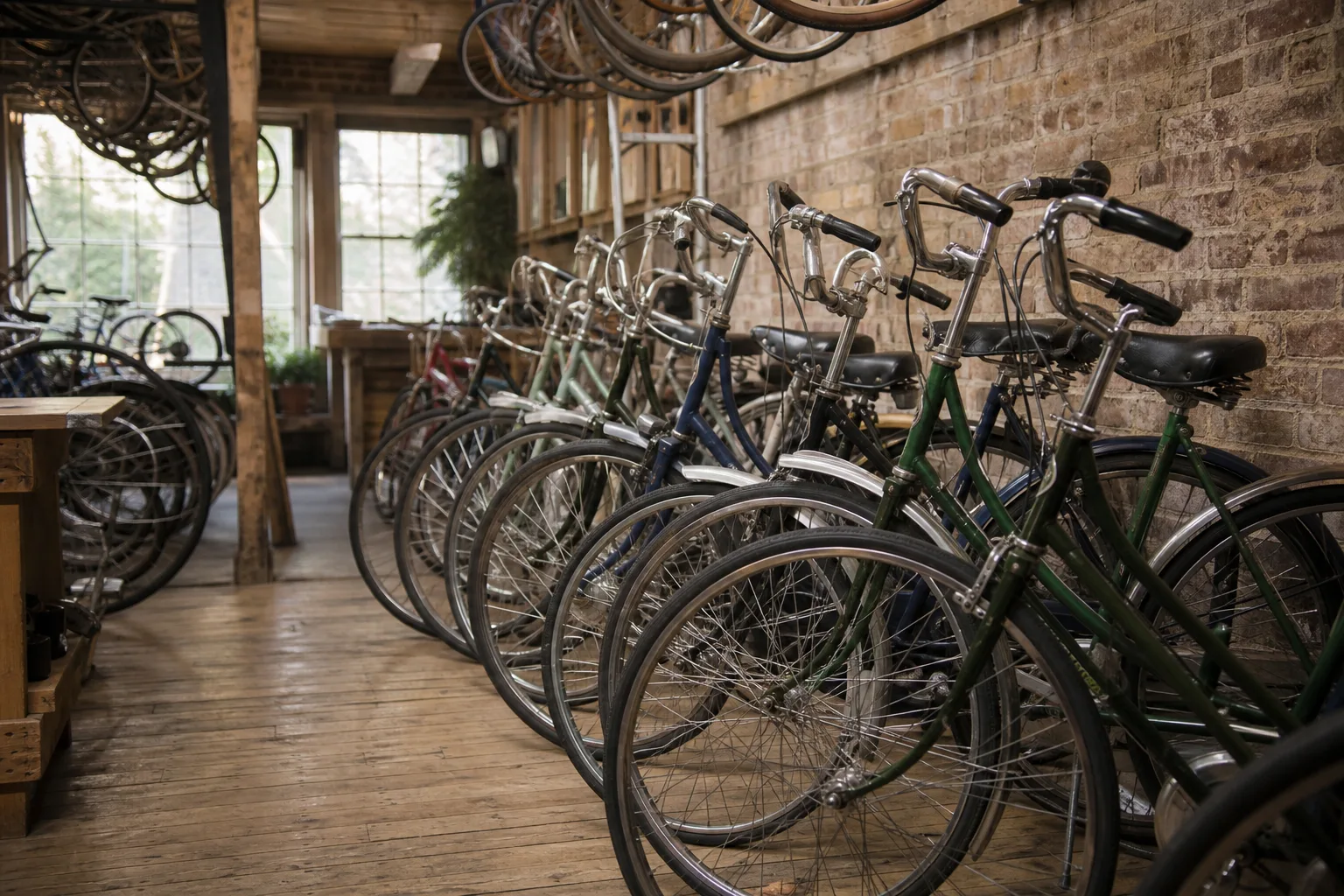
One rider worked through balloon tyres, coaster brakes, saddle height and what a heavy steel frame does on the single hill in town, then wrote down which parts are worth paying for and which ones rust out first.
The decision looks simple in a showroom, where the floor is level and every bike rolls the same, and it stops looking simple about four blocks into a real ride. A single-speed with a coaster brake, a three-speed internal hub, and a seven or eight speed derailleur setup all do the same job on flat pavement, which is most of what an upright comfort bike is asked to do. The differences show up in three places: the one grade on your usual route, the weight you lift onto a porch, and how hard you squeeze to stop.
What the single-speed does when the road tilts
A coaster brake bike, meaning one where you stop by pedaling backward rather than pulling a lever, is geared as a compromise. The manufacturer picks one ratio that feels easy enough at a walking-pace start and not spinny at eleven or twelve miles an hour, and that ratio is chosen for flat ground. Put a grade under it and you have two options, both physical: stand up and push through, or get off and walk. Neither is a failure. But a careful reader checks the actual hill before buying, and the check is simple: ride the route on anything, note where you slowed down, and ask whether you want to do that standing.
The second coaster brake trait catches people at intersections. You cannot back-pedal to reposition the cranks for a start, because backing up is braking, so you learn to coast to a stop with one pedal already forward. On a slope that matters more than it sounds, since a rolling start uphill from the wrong pedal position is awkward. Riders who have done it for years never think about it. Riders coming from a road bike think about it for the first month, then stop.
What the internal hub actually buys you
An internally geared hub puts the gears inside the rear wheel, sealed away from grit, rain and road salt, with either three, five, seven or eight speeds depending on the model. Three is the classic and the one most comfort bikes use. What you get is the ability to shift while stopped, which is exactly what you want at a light on a grade, and a drivetrain that needs almost nothing from you except a chain wipe and, on some models, a periodic oil change at a shop. What you pay is weight, typically a couple of pounds concentrated at the back wheel, and money, since the same bike with a hub usually lands a clear step above the single-speed version.
The range is the honest limitation. Three speeds spread across a modest span will flatten a short neighborhood rise and will not turn a genuinely steep block into an easy one. Check the low gear by riding the bike up the worst thing you will face, not around the parking lot. Many hubs are also built with a coaster brake inside, so you can have the sealed gears and the foot brake together, which is a combination worth asking about by name because it is not always on the spec sheet in plain language.
Why a derailleur is fine, if you will keep it
External gears, the ones with the little cage hanging below the rear wheel, give you the widest range for the least money and the least weight. That is a real advantage and there is no reason to be snobbish about it. The trade is exposure and attention: the mechanism sits in the weather, the cable stretches in the first month, and a bike stored outdoors will need the shifting adjusted more often than a hub will. If the bike lives in a garage and you are comfortable with a shop tune once a year, this is the sensible choice for hilly ground.
The brake check nobody does in the store
Rim brakes on a comfort bike stop a machine that may weigh thirty-five pounds before you sit on it, and the lever pull needed is more than the same brake asks on a light bike. The Consumer Product Safety Commission is responsible for bicycle requirements sold in this country, and hand strength is the variable no standard can set for you. Squeeze the levers hard in the store, with the reach adjusted in toward your palm if the levers allow it, and then ride down whatever slope the lot offers and stop from real speed. A bike that stops confidently there will stop confidently everywhere you ride it.
Take the hill first, the storage second, and the brake lever third, in that order, and the right answer usually names itself before you have finished the test ride.