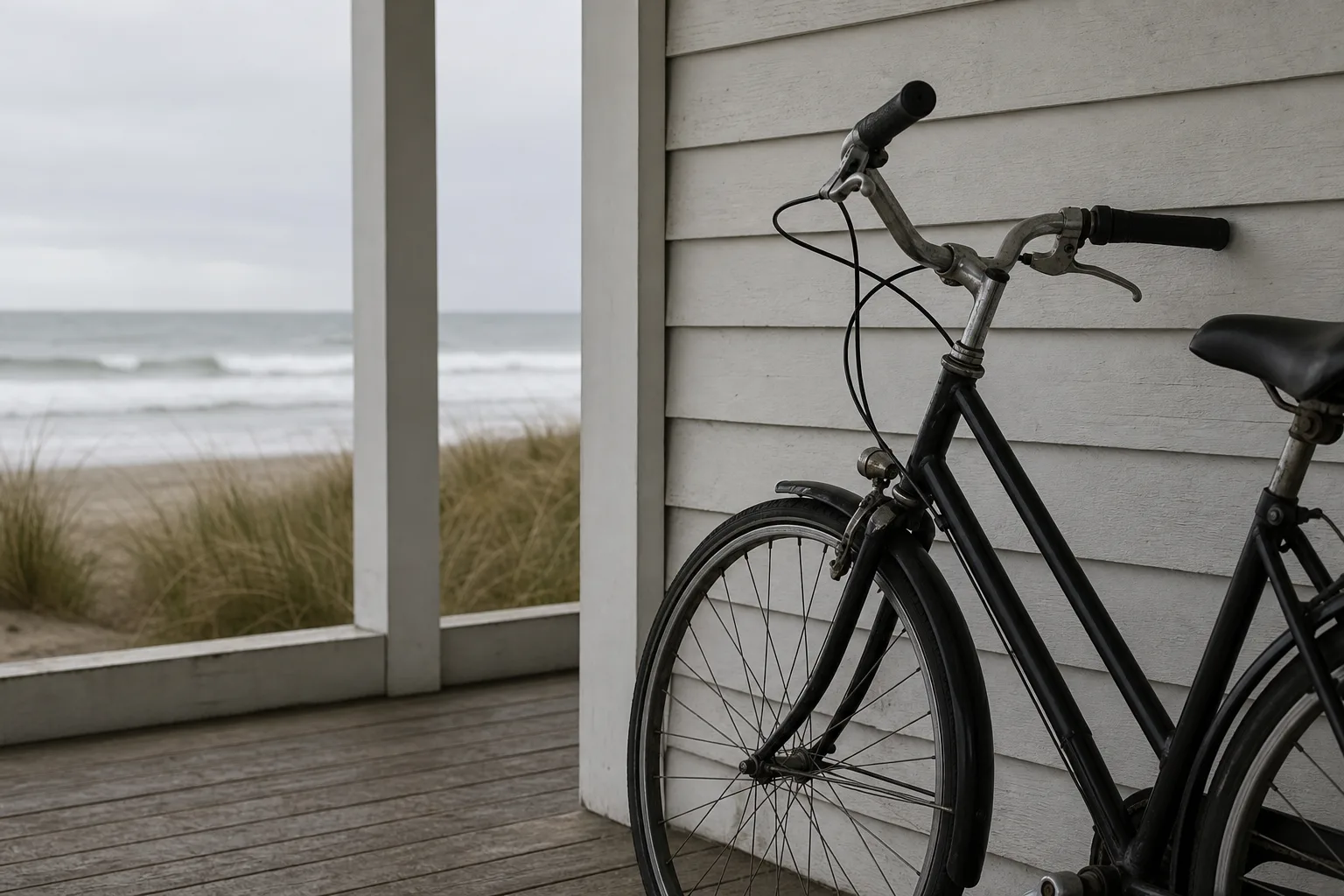
One rider worked through balloon tyres, coaster brakes, saddle height and what a heavy steel frame does on the single hill in town, then wrote down which parts are worth paying for and which ones rust out first.
A bike left on an open porch two blocks from the water does not fail all at once. It fails in an order, and the order is predictable enough that you can get ahead of it with a rag, a small bottle of oil and about four minutes a week. Salt in the air settles as a film, the film holds moisture against metal long after the surface looks dry, and corrosion works inward from wherever water sits longest. The parts that seize are rarely the parts that look worst.
1. Cable housings go first, and they go quietly
Housing is the plastic-coated sleeve that carries a brake or shifter cable from the lever to the part it pulls. Inside it sits a bare steel wire, and salt-laden moisture wicks in at the cut ends, especially at the low points near the bottom bracket where water pools. The symptom is not a snapped cable. It is a brake lever that returns slowly, or a three-speed shifter that will find second gear going up but not coming back down. Pinch the lever, let it go, and watch how fast it springs back. Sluggish return means rust in the housing, and housing is cheap.
2. The chain rusts on the inside, where oil should be
Surface rust on the outer plates is cosmetic and wipes off. What matters is the roller and pin inside each link, because that is where a chain either flexes or binds. Lift the bike, turn the cranks backward, and look for links that hop stiffly over the rear cog instead of wrapping smoothly. A stiff link means the interior is dry and corroding. Wipe the chain with a rag, run a drop of oil onto each roller, spin the cranks, then wipe the outside dry again. Oil left on the surface collects grit and salt both.
3. Chrome fenders, and the gap between spotting and pitting
Chrome plating on a fender or a rim is thin, and it sits over steel that has no interest in the ocean. Brown speckling that lifts with a rag and a little metal polish is only spotting, and a wipe after a foggy night keeps it there. Pitting is different: the plating has broken, the steel beneath has swelled, and the surface feels rough under a fingertip even after cleaning. Check the fender undersides and the bolt heads at the stay mounts, since those hold water and get skipped. Wax over sound chrome slows the whole process considerably.
4. The parts you only find by moving them
Some corrosion hides at joints that never move. A steel seatpost in a steel frame can bond in place over a couple of damp winters, and so can a stem wedge, a fender bolt or a coaster brake arm clamped to the chainstay. Once a season, loosen the seatpost binder, twist the post, raise and lower it an inch, then grease the shaft and put it back. Do the same with the stem. Salt-driven corrosion is exactly the failure mode that standards work at the National Institute of Standards and Technology is responsible for measuring, and the practical version is simply this: nothing seizes if it moves.
5. Knowing when a cheap bike has stopped being worth it
Housings, a chain, a set of brake pads and a pair of cables are inexpensive parts, and replacing all of them at once still costs a fraction of a new bike. That is a good repair. The line moves when the corrosion reaches things that carry load or cannot be swapped without labor: rims pitted through the braking surface, spokes rusted at the nipples so the wheel cannot be trued, a bottom bracket shell weeping rust, or a frame gone soft under the paint at the chainstay bridge. On a low-cost department-store bike, one wheel rebuild often exceeds what the bike sold for.
The cheapest change is not a part at all. A cover that reaches the ground traps humidity and makes things worse, but a cover with the bottom left open, or a spot under a roof overhang out of the direct spray, cuts the amount of salt landing on the bike by a wide margin. Rinse with fresh water after a storm, dry the chain, and check the brake levers on the first of the month.